
SDG Goals in India: A Pathway to Sustainable Development
- advisorssquad
- Jan 25
- 4 min read

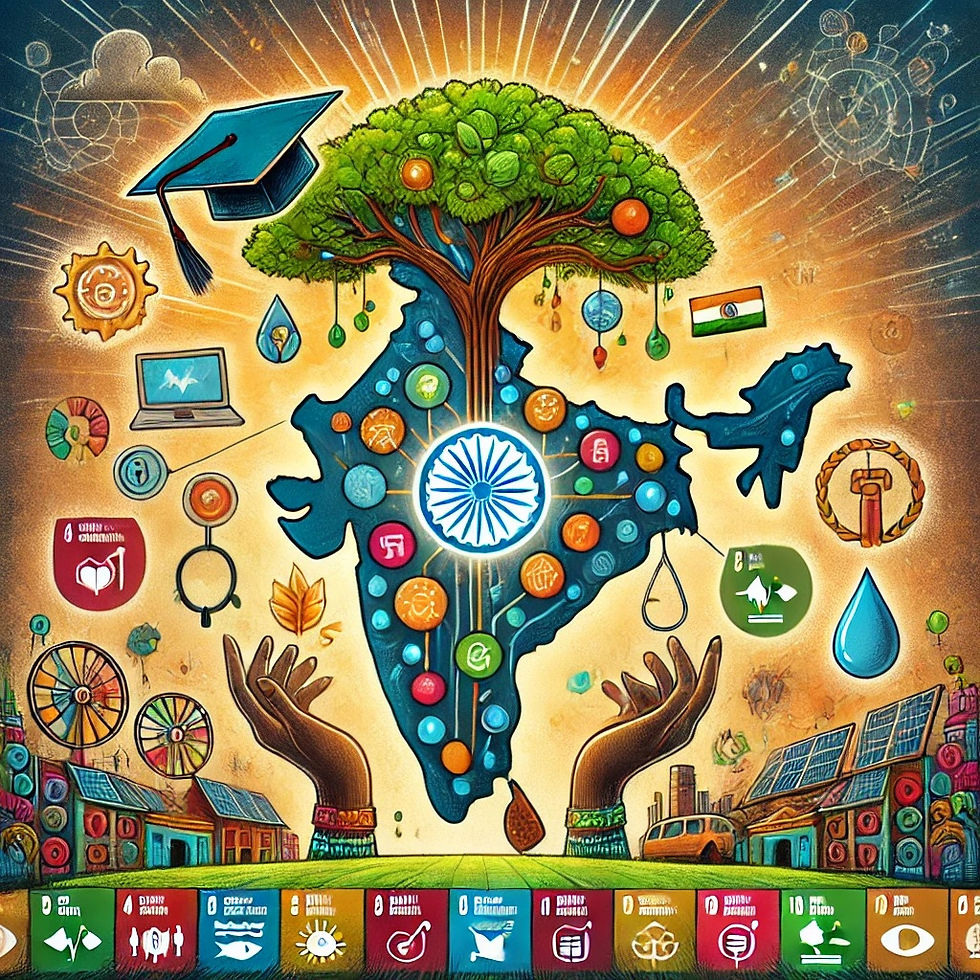
India, with its vast population, diverse cultures, and growing economy, faces both challenges and opportunities in achieving the Sustainable Development Goals (SDGs) set by the United Nations. These 17 global goals are designed to address pressing issues such as poverty, inequality, climate change, environmental degradation, peace, and justice. As the world’s largest democracy and the second-most populous country, India’s actions toward these goals have far-reaching implications—not just for its own development, but for the global sustainability agenda.
India's commitment to achieving the SDGs is embedded in its national policies and strategies. The country has made significant strides toward many of the goals, but there are still hurdles to overcome. Let’s explore how India is advancing on the SDG path, the challenges it faces, and how it can accelerate its journey toward a sustainable future.
1. India's Progress on the SDGs: Key Areas of Impact
India has made notable progress in several SDG areas, but there’s still much work to be done. Here’s a look at some of the key goals and how India is addressing them:
Goal 1: No Poverty
India has made significant strides in reducing extreme poverty. According to the World Bank, the poverty rate in India has declined substantially over the past few decades. Government initiatives like the Pradhan Mantri Jan Dhan Yojana (PMJDY) and the Mahatma Gandhi National Rural Employment Guarantee Act (MGNREGA) have helped provide financial inclusion and employment to millions. However, challenges remain, particularly in rural and underdeveloped regions.
Goal 2: Zero Hunger
India has made notable progress in food security, with initiatives such as the Public Distribution System (PDS) and the National Food Security Act (NFSA), which have provided essential nutrition to millions of citizens. Despite this, issues like malnutrition, food wastage, and regional disparities continue to hinder progress toward zero hunger.
Goal 3: Good Health and Well-Being
India has significantly improved life expectancy and reduced child mortality through initiatives like National Health Mission (NHM) and Ayushman Bharat. However, the healthcare system faces challenges such as inadequate infrastructure, unequal access to health services, and the growing burden of non-communicable diseases.
Goal 4: Quality Education
India’s education sector has expanded dramatically in the last two decades, with enrollment rates at primary and secondary levels increasing significantly. Programs like Beti Bachao Beti Padhao and Sarva Shiksha Abhiyan have worked to enhance education for girls and marginalized communities. However, quality education remains uneven, with urban areas often seeing better outcomes than rural or remote regions.
Goal 6: Clean Water and Sanitation
The Swachh Bharat Mission has been pivotal in improving sanitation and hygiene, reducing open defecation, and enhancing water supply across India. However, challenges related to water scarcity, groundwater depletion, and pollution remain significant, especially in urban areas.
Goal 7: Affordable and Clean Energy
India is increasing its renewable energy capacity, with solar and wind energy taking center stage in national energy planning. The National Action Plan on Climate Change aims to expand clean energy initiatives. However, India still faces reliance on coal-based energy sources, and ensuring affordable energy access to all remains a challenge.
Goal 8: Climate Action
India is committed to addressing climate change through its Nationally Determined Contributions (NDCs) under the Paris Agreement. It is scaling up its efforts in renewable energy production, electric mobility, and afforestation. However, India's vulnerability to climate change impacts such as floods, droughts, and rising temperatures requires more concerted action to mitigate and adapt to these challenges.
2. Challenges India Faces in Achieving SDGs
While India has made progress, there are several challenges that must be addressed to ensure the country can achieve the SDGs by 2030:
Inequality and Social Exclusion
Despite progress in poverty reduction, inequality remains a significant challenge. Social, economic, and regional disparities persist, particularly affecting women, marginalized communities, and people living in rural areas. Discrimination based on caste, gender, and ethnicity continues to impede access to opportunities and services.
Urbanization and Infrastructure
India’s rapid urbanization is straining the country’s infrastructure, leading to challenges in transportation, waste management, housing, and access to basic services. As more people move to cities, ensuring sustainable urbanization that is inclusive and resilient is critical to achieving SDG 11 (Sustainable Cities and Communities).
Environmental Sustainability
India’s rapid economic growth has led to increased pressure on natural resources and ecosystems. Air pollution, water scarcity, deforestation, and biodiversity loss are key environmental challenges. Balancing development with environmental sustainability remains one of the toughest hurdles.
Economic Growth and Employment
While India’s economy has grown significantly, the country faces challenges in creating enough quality jobs for its growing workforce. This is especially true in the rural economy, where agricultural employment remains prevalent, often with low wages and insecure conditions.
3. Accelerating India’s Path to SDGs
To accelerate its progress on the SDGs, India must focus on several key areas:
Policy Alignment and Integration
India needs to integrate SDG targets into national and state-level policies, ensuring that all sectors of the economy and government are working towards the same sustainable objectives. A cohesive strategy with strong policy support, funding, and coordination between various stakeholders is essential for achieving the SDGs.
Sustainable Urban Development
India’s urban areas must focus on sustainable city planning, efficient waste management, renewable energy solutions, and creating affordable housing. Prioritizing these elements will help achieve SDG 11 (Sustainable Cities) and SDG 7 (Affordable and Clean Energy).
Social Inclusion and Empowerment
Efforts should be made to promote social inclusion, especially for marginalized groups such as women, lower castes, and indigenous communities. Policies and programs should focus on improving access to education, healthcare, and economic opportunities for all.
Climate Mitigation and Adaptation
India must accelerate its efforts to address climate change by transitioning to renewable energy, improving energy efficiency, and ensuring sustainable land use practices. Climate resilience measures need to be integrated into infrastructure planning, especially in vulnerable regions.
Technology and Innovation
Harnessing technology and innovation can provide solutions to many SDG challenges. Leveraging digital platforms for education, health services, and financial inclusion, as well as promoting clean technologies, can significantly advance India’s SDG agenda.
4. The Role of Private Sector and Civil Society
In addition to government efforts, the private sector and civil society have a critical role in achieving India’s SDGs. Corporate Social Responsibility (CSR) initiatives, sustainable business practices, and partnerships with NGOs can create a multiplier effect, amplifying the impact of SDG-related programs.
📱Written by Advisors Squad
🌐Website: https://www.advisorssquad.org
#SDGsIndia #SustainableDevelopment #IndiaForSustainability #2030Agenda #CleanEnergy #ClimateAction #EndPoverty #GenderEquality #SustainableCities #SDGsInIndia #IndiaProgress #InclusiveGrowth #SustainableFuture #GreenIndia #SocialInclusion #SDGGoals #RenewableEnergy #HealthAndWellBeing #ZeroHunger #AffordableEducation #SustainableDevelopmentGoals


Comments